Navitas Expands its Power Technology With Solid State Transformers
Power bottlenecks are occurring across AI data centers. At the rack, as GPU density increases, silicon power chips are reaching their efficiency limits. Upstream, legacy transformers are also reaching their efficiency limits in delivering electricity to AI data centers. Navitas Semiconductor addresses these transformer efficiency limits by extending its silicon carbide (SiC) power chip technology from rack level power delivery into data center power infrastructure. This expands NVTS’s power technology reach further upstream.
How data center power infrastructure works today
Most data centers still rely on legacy data center power infrastructure, where electricity enters from the grid and passes through transformers that step down high AC voltage. The electricity then moves through power conversion systems that convert it to the lower DC voltages required by the racks.
This infrastructure was designed for cloud data center power requirements and becomes increasingly inefficient as AI data center power demands increase. The reliance on multiple transformers and power conversion systems introduces energy losses that become increasingly significant as power demand increases. As a result, data center operators are evaluating more efficient power infrastructure.
Why AI data centers are shifting toward 800V DC
Before data center operators deploy new power infrastructure, they must consider how it will align with future voltage architectures inside AI data centers, as this will determine what types of power infrastructure can be deployed.
One voltage architecture gaining attention is higher voltage direct current distribution, including emerging 800V DC distribution systems. Higher voltage DC allows power to be delivered at lower current, reducing resistive losses and improving the efficiency of power distribution before electricity reaches the racks.
While legacy data center power infrastructure can handle 800V DC, it was not designed for it and may require upgrades. As a result, data center operators are increasingly evaluating more efficient transformers and power conversion systems compatible with 800V DC.
Solid state transformers as an emerging technology
One technology capable of supporting 800V DC is the solid state transformer (SST). Unlike legacy iron core transformers that step voltage down through passive magnetic components, solid state transformers use power chips and high frequency power electronics to actively convert and control voltage. As a result, solid state transformers can step voltage down more efficiently than legacy transformers. This makes them relevant for AI data centers evaluating 800V DC.
Navitas’ solid state transformer strategy
At the Applied Power Electronics Conference 2026, Navitas introduced a 250 kilowatt solid state transformer designed specifically for AI data centers, developed in collaboration with École Polytechnique Fédérale de Lausanne.
For operators evaluating 800V DC, Navitas’ solid state transformer offers additional efficiency advantages. It combines its SiC power chips with digital control modules to further improve power conversion efficiency. This enables AC to DC conversion, voltage regulation, and power management to be digitally controlled within the transformer.
Extending Navitas’ AI power technology
NVTS’s solid state transformer announcement extends its SiC power technology and digital control capabilities further upstream into data center power infrastructure. As AI data center power requirements increase, NVTS extending its power technology beyond the rack positions the company within a broader transition toward more efficient AI data center power delivery.
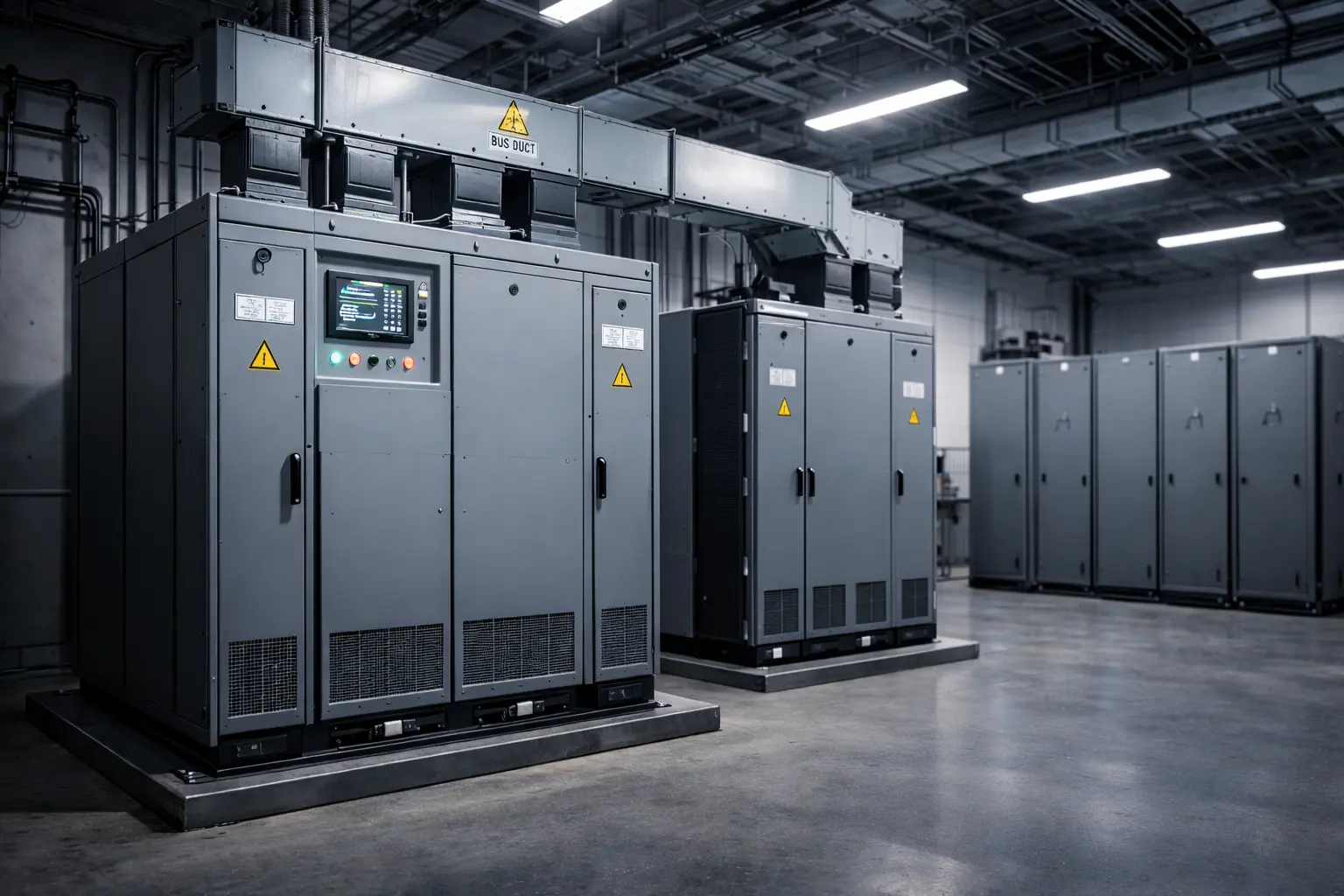
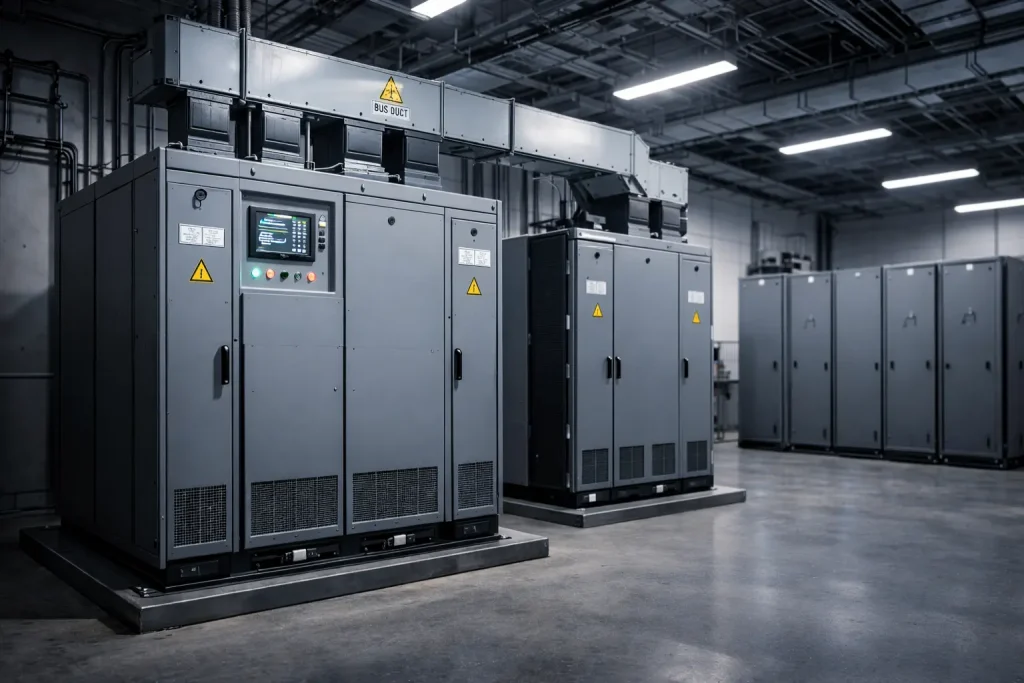
Disclosure: This article reflects the author’s personal analysis and opinions and is not investment advice. The author holds shares in Navitas Semiconductor (NVTS) at the time of writing. Images used are independent illustrative renderings and are not official Navitas Semiconductor promotional materials.
RISK PROFILE
Transformer Adoption: NVTS’s expansion into solid state transformers extends its reach into data center power infrastructure. If AI data center operators do not adopt solid state transformers or transition toward 800V DC distribution systems, NVTS’s expansion opportunity is limited.
PORTFOLIO HOLDINGS
Track when The Richo Edge allocates capital to NVTS.
Monitor portfolio holdings, position changes, and analysis coverage.
View Portfolio Holdings