AEHR Captures AI Exposure but Not Structural Upside
AI growth is driving a semiconductor investment cycle, but not every company exposed to it gets the same upside. Structural upside concentrates with companies whose revenue scales with semiconductor unit proliferation rather than manufacturing capacity expansion.
AEHR has exposure to this semiconductor investment cycle. However, its revenue is tied primarily to semiconductor capacity expansion rather than semiconductor unit proliferation. This differentiation matters.
Where upside concentrates in semiconductor cycles
In semiconductor cycles, structural upside concentrates with the companies that control semiconductor design and manufacturing. Semiconductor design companies capture this upside because their revenue scales with semiconductor unit proliferation when their architecture is differentiated and not easily replicated, allowing operating margins to widen as unit proliferation expands.
Semiconductor manufacturers also participate through revenue scaling with unit proliferation. As unit proliferation expands, their fixed costs are absorbed across higher output, expanding operating margins through operating leverage. Upside therefore concentrates with the companies that control semiconductor design and manufacturing. Companies that supply semiconductor equipment may benefit, but benefit is not the same as control.
AEHR’s position in the AI architecture
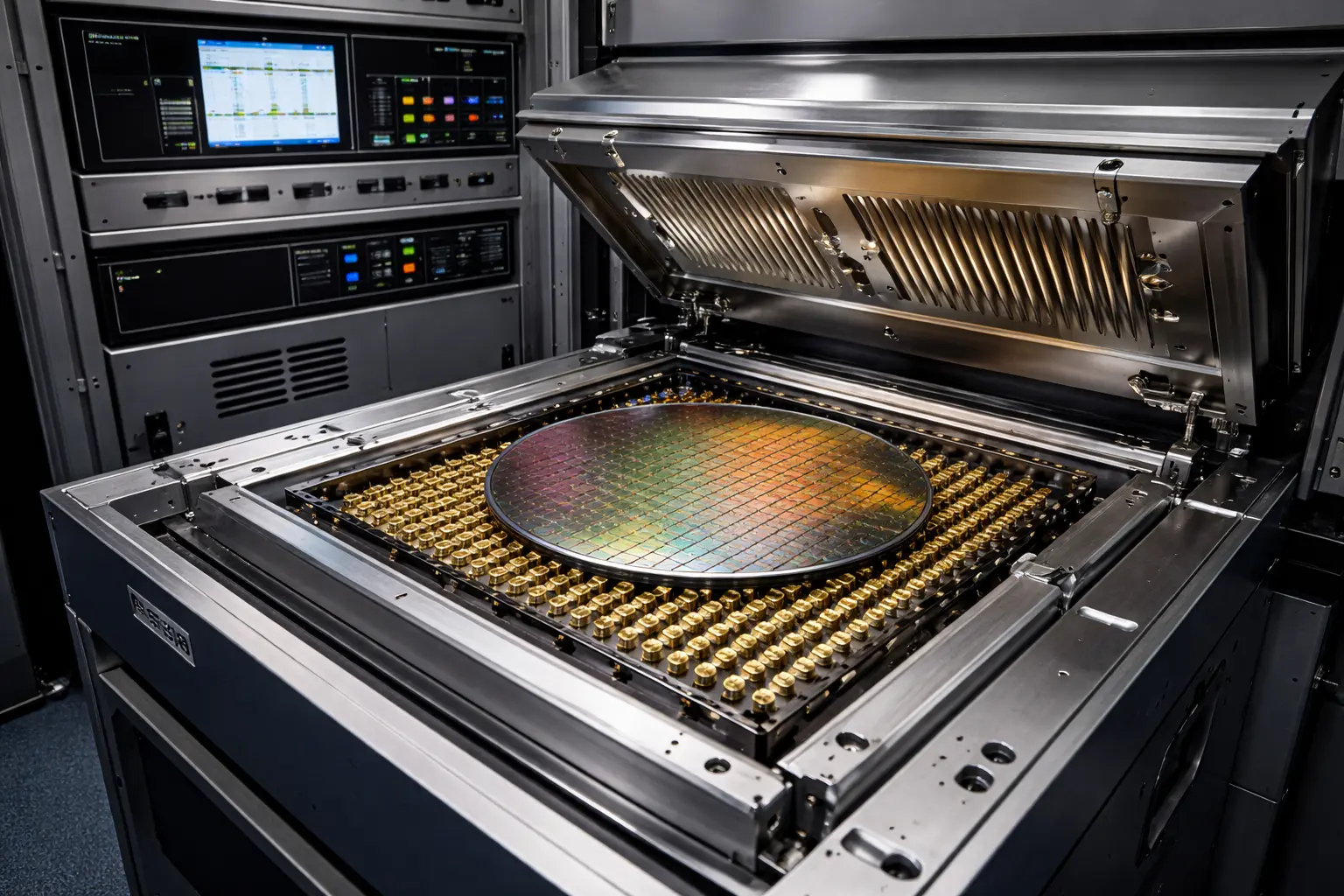
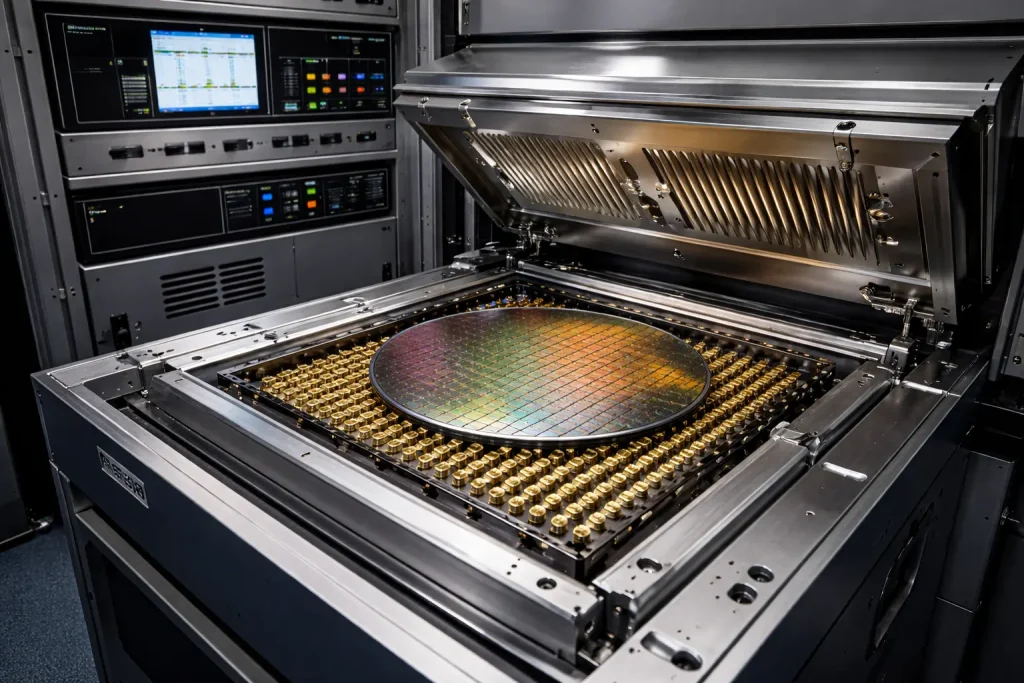
AEHR is a test equipment supplier providing wafer level burn in systems to semiconductor manufacturers, with its FOX platform enabling high-parallel testing. Demand for its systems is driven by semiconductor capacity expansion, which occurs when existing manufacturing capacity approaches its limits. AEHR’s exposure is therefore tied to capacity expansion rather than semiconductor unit proliferation. When capacity expansion moderates, testing equipment demand moderates with it.
Margin profile and economic depth
Due to this positioning, AEHR’s margin profile is structurally constrained. Its gross margins are near 40%, solid for a test equipment supplier but below the margins sustained by companies that control semiconductor design and manufacturing. Leading semiconductor design companies often operate with gross margins above 60%, while leading semiconductor manufacturers typically sustain margins in the mid-40% to mid-50% range.
That margin gap exists because structural upside concentrates with companies that control semiconductor design, particularly differentiated architectures. Equipment suppliers, by contrast, sell tools into semiconductor capacity expansion, and pricing is negotiated with semiconductor manufacturing companies. Their margins are constrained by competitive bidding and semiconductor manufacturing capital allocation decisions.
The moat test
AEHR’s solid margins are supported by proprietary engineering in wafer level burn in and system design, and its systems are qualified and deployed by semiconductor manufacturers. However, semiconductor manufacturers typically qualify multiple test equipment suppliers within the same category. Therefore, test equipment installation does not embed AEHR within the manufacturer’s production process, nor does it create durable switching costs. As a result, AEHR does not control semiconductor design or manufacturing. It remains a supplier to semiconductor capacity expansion.
Installed base support
Although AEHR’s primary revenue exposure is tied to semiconductor capacity expansion, the company also generates revenue from servicing installed test equipment and configuration upgrades. This revenue is linked to the utilization of deployed test equipment rather than to equipment deployments.
Installed base support can stabilise revenue volatility when equipment deployments moderate. However, this revenue stream does not scale with semiconductor unit proliferation. It supports operational continuity, but it does not change AEHR’s core business model, which remains tied to capacity expansion.
Where structural upside sits
AEHR supplies test equipment tied to semiconductor manufacturer capacity expansion. This gives the company exposure to the semiconductor investment cycle and to benefit from AI growth. But it does not control semiconductor design or manufacturing, where revenue scales with semiconductor unit proliferation and structural upside concentrates.
Disclosure: This article reflects the author’s personal analysis and opinions and is not investment advice. The author does not hold shares in Aehr Test Systems (AEHR) at the time of writing. Images used are independent illustrative renderings and are not official Aehr Test Systems promotional materials.
RISK PROFILE
Capacity Expansion: AEHR captures AI exposure through semiconductor capacity expansion rather than semiconductor unit proliferation. If expansion moderates, demand will slow. Without participation in semiconductor unit proliferation, the company does not benefit from structural upside.
PORTFOLIO HOLDINGS
Track when The Richo Edge allocates capital to AEHR.
Monitor portfolio holdings, position changes, and analysis coverage.
View Portfolio Holdings