How Legence Is Scaling With Rising AI Data Center Execution Complexity
As GPU density increases within AI data centers to support increased compute workloads, electrical and cooling system requirements increase, driven by both system complexity and deployment intensity. This concentrates value in companies capable of electrical and cooling system execution as system complexity and deployment intensity increase. This is where Legence operates and captures value.
The electrical and cooling systems inside AI data centers
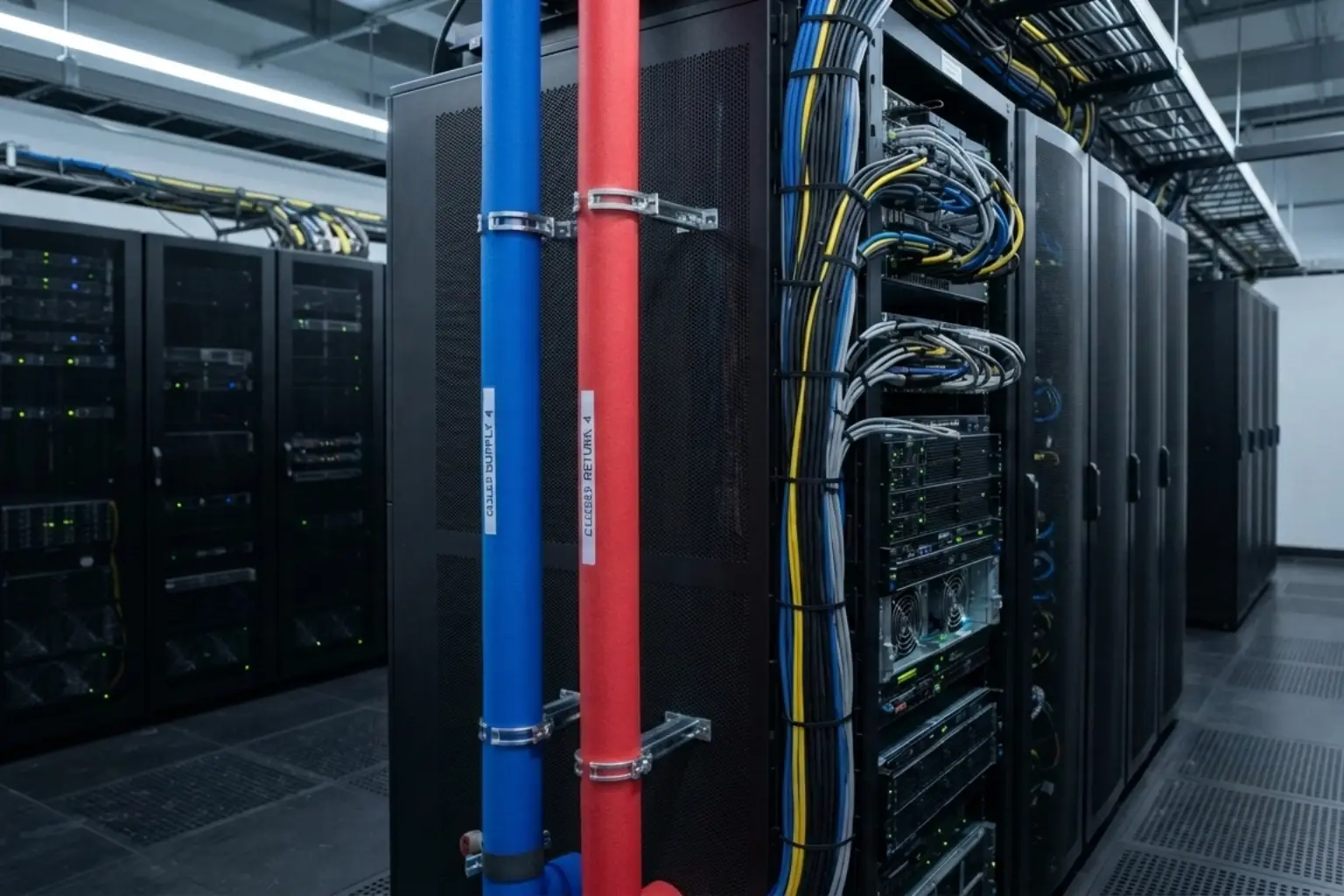
AI data centers rely on electrical and cooling systems to support GPUs. Electrical systems distribute incoming power throughout AI data centers using redundant power paths. This prevents power failures, balances electrical loads, and maintains continuous power delivery to GPUs. Cooling systems remove heat generated by GPUs and electrical systems to maintain stable operating temperatures.
This reflects the interdependence of electrical and cooling systems required to support GPUs. The performance of one system depends on the other, requiring both to be designed and delivered together. Executing these systems is distinct from general construction. It requires specialized design, installation, and commissioning across the entire electrical and cooling system, increasing the level of specialization required to deliver these systems.
Multiple providers operate within electrical and cooling systems
Despite this specialization, electrical and cooling systems are not concentrated within a single provider. There are multiple providers operating in the design, installation, commissioning, and ongoing maintenance of electrical and cooling systems for AI data centers. These providers specialize in individual stages of electrical and cooling system delivery rather than the entire system.
This creates fragmented delivery where design, installation, commissioning, and ongoing maintenance are performed by separate providers. Because providers specialize and delivery is fragmented, execution capability rather than market exclusivity becomes the defining advantage.
Legence’s execution capability In AI data center expansion
This fragmented delivery is where Legence built its execution capability. Legence’s execution capability is delivered through an integrated, design-build model. It delivers turnkey design, installation, commissioning, and ongoing maintenance as a unified service, while also offering these services independently.
This integrated execution model creates an execution capability advantage in delivery. By integrating design, installation, commissioning, and ongoing maintenance within a single coordinated workflow, Legence keeps more of the electrical and cooling system under one provider instead of splitting it across multiple providers. This improves execution.
Scaling complexity increases system-level execution demand
This execution capability becomes increasingly important as AI data centers scale to support higher compute workloads by increasing GPU density. This increased density requires electrical systems to support higher continuous loads and cooling systems to manage greater thermal output, increasing system complexity. This also increases deployment intensity as these systems must be delivered at scale.
This increases the importance of Legence’s execution capability advantage. As system complexity and deployment intensity increase, value shifts toward companies capable of integrating specialized electrical and cooling system delivery through a single provider. This is where Legence captures value.
Implications for AI infrastructure build-out cycles
Because electrical and cooling systems are interdependent and require coordinated design and delivery, integrated execution through a single provider becomes increasingly valuable. As GPU density increases within AI data centers to support higher compute workloads, rising system complexity and deployment intensity increase the importance of this integrated execution capability, strengthening Legence’s execution capability advantage and ability to capture value.
Disclosure: This article reflects the author’s personal analysis and opinions and is not investment advice. The author does not hold shares in Legence Holdings Corporation (LGN) at the time of writing. Images used are independent illustrative renderings and are not official Legence Holdings Corporation promotional materials.
RISK PROFILE
Execution Capability: Legence’s integrated design-build model creates its execution capability advantage. If fragmented providers execute as effectively as Legence’s integrated model, Legence’s execution advantage narrows.