License Tensions Could Cost IONQ More Than The SKYT Acquisition
IonQ’s acquisition of SkyWater Technology was framed as a strategic move to secure advanced manufacturing capabilities critical to the future of quantum computing. At face value, the logic is straightforward: quantum systems are running into scaling constraints, and deeper control over fabrication could offer a competitive edge. But the implications of the deal extend well beyond quantum. That is where the tension begins.
The current computing wall
Quantum computing’s central challenge is no longer theoretical feasibility. It is scaling. As quantum systems grow, performance is increasingly constrained by conventional 2D electrical architectures around the qubits, rather than by qubit design itself.
This is the electrical constraint IonQ and its peers are approaching. Overcoming it requires much tighter physical integration between logic, memory, and control. Once that limit is hit, manufacturing capability, not quantum theory, becomes the bottleneck, which is the core reason IonQ wants SkyWater.
Why packaging is not the answer
Confronted with these scaling limits, IonQ could continue extending conventional 2D fabrication, but only through increasingly complex approaches. That pressure typically shifts the industry toward advanced 2.5D packaging, often presented as the natural next step. It is not.
2.5D packaging does not resolve the electrical scaling constraint around the qubits. It preserves the same planar electrical control architecture and simply distributes it across multiple dies. As quantum systems scale, electrical routing complexity, signal integrity challenges, and control overhead continue to increase. Packaging can change the physical placement of electrical connections, but it cannot fundamentally reduce the electrical complexity itself and therefore does not solve the underlying scaling constraint.
3D monolithic integration: the structural fix
The only path that resolves the electrical scaling constraint is true 3D monolithic integration, a manufacturing capability controlled by SkyWater Technology. Unlike 2.5D packaging, which stacks finished chips, 3D monolithic integration fabricates multiple active transistor layers directly on top of one another during the manufacturing process.
Logic, memory, and interconnect are built as one vertically integrated electrical system. This directly reduces electrical routing complexity, improves signal integrity, and lowers control overhead by shortening electrical paths and simplifying control wiring at the device level.
SKYT’s M3D origins and licensing reality
SkyWater Technology’s role in 3D monolithic integration originates in Stanford led research, with participation from MIT and funding from the U.S. Department of Defense. This work was not conceived as a bespoke solution for a single application. It was developed as a manufacturing breakthrough with broad commercial relevance across multiple end markets.
Stanford’s technology licensing model reflects that intent. Licenses are structured to enforce real world deployment, measurable progress, and monetization. Diligence requirements and progress reporting are not formalities; they are core mechanisms Stanford uses to ensure foundational manufacturing technologies achieve broad commercial impact rather than subsidizing a single company’s private advantage.
Within that framework, a commercialization path that frames 3D monolithic integration primarily around a single internal use case, such as quantum computing, would create tension. Narrow application, delayed deployment, or effectively parking the technology inside a long term internal research program would run counter to how Stanford structures and enforces its licenses, even if specific contractual terms are not publicly visible.
SKYT Fab 25 constraint
That potential tension could play out in manufacturing reality. SkyWater’s Fab 25 exposes the structural limits of the IonQ SkyWater arrangement. The company’s 3D monolithic capability relies on scarce, highly specialized tooling, nonstandard process flows, and tightly scheduled capacity, while scaling 3D monolithic chips for commercial deployment requires external customers, long yield learning cycles, dedicated customer engineering, and sustained capital investment.
Quantum fabrication follows a different logic entirely: low volume, bespoke runs, specialized talent, distinct yield metrics, and a research driven cadence. In practice, these are conflicting operations inside the same fab. Running one well makes it harder to run the other efficiently.
IonQ’s framing problem
IonQ has publicly stated its intention to use SkyWater’s 3D monolithic technology to advance its quantum computing roadmap. That framing matters. In IonQ’s communications, the emphasis has been on quantum specific application, with little to no discussion of market agnostic deployment, external customer access, or aggressive commercialization beyond quantum systems.
That absence matters. Framing a foundational manufacturing technology solely around a single internal use case narrows its perceived scope and intent. For technology licensed under expectations of broad commercial deployment, such framing is not neutral. It directly conflicts with the licensing terms.
Independence vs oversight: the tension
To IonQ’s benefit, it has stated that SkyWater will continue to operate independently, albeit under IonQ’s oversight. The ambiguity lies in how far that oversight extends. If oversight constrains SkyWater’s ability to pursue market agnostic customers or to commercialize 3D monolithic integration aggressively across industries, friction with licensing expectations becomes inevitable. Independence in name does not resolve this tension if strategic control limits execution.
The valuation inversion investors are missing
At the core of this tension, manufacturing constraints and licensing pressure invert the financial logic of the deal. Many investors view SkyWater’s technology as a strategic upside for IonQ. That framing is backwards. The more relevant question is whether IonQ can serve as a stabilizing structure that enables SkyWater to meet its licensing obligations and realize its commercialization potential.
If SkyWater’s 3D monolithic technology is constrained by IonQ’s strategic focus, it becomes a liability rather than an asset. In that scenario, the burden flows upward. IonQ must absorb the cost of maintaining a commercially aggressive manufacturing platform while pursuing a quantum timeline that may not align with licensing pressure.
Closing warning
This partnership will not be defined by quantum milestones alone. It will be defined by commercialization behavior. The path SkyWater takes with 3D monolithic integration, who can access it, how broadly it is deployed, and how aggressively it is monetized, will determine whether IONQ and SKYT are aligned or conflicted.
Investors should watch actions, not assurances. In deals involving foundational manufacturing technology, licensing obligations are not a footnote. They are the constraint that ultimately determine whether strategic alignment exists or whether the partnership collapses under its own contradictions.
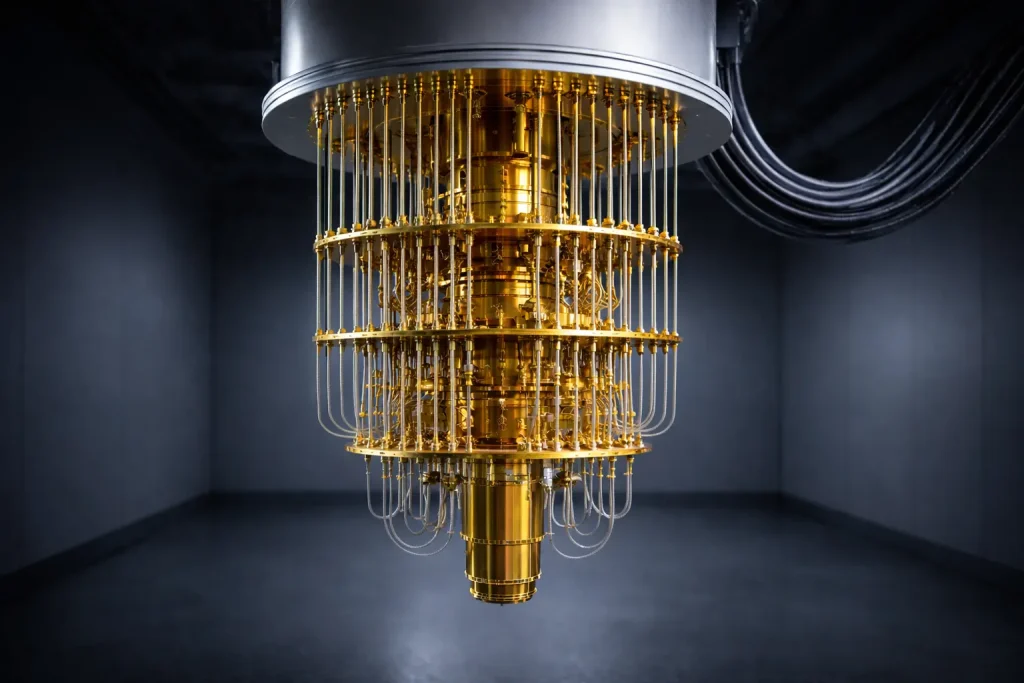
Disclosure: This article reflects the author’s personal analysis and opinions and does not constitute investment advice. The author does not hold shares in IonQ, Inc. at the time of writing. Images used are independent illustrative renderings and are not official IonQ, Inc. promotional materials.
RISK PROFILE
Licensing Conflict: 3D monolithic technology is licensed under mandates for broad commercialization. By framing this tech primarily for internal quantum use, IonQ risks a licensing breach or “parking” the tech, potentially transforming the SkyWater acquisition from a strategic asset into a capital heavy liability.
RELATED ANALYSIS
SKYT Is Sitting on a Critical Chip Breakthrough
POET Solves AI’s Next Constraint After Power Chips
NVTS Exposes AI’s Power Limit — Silicon Is the Real Bottleneck